
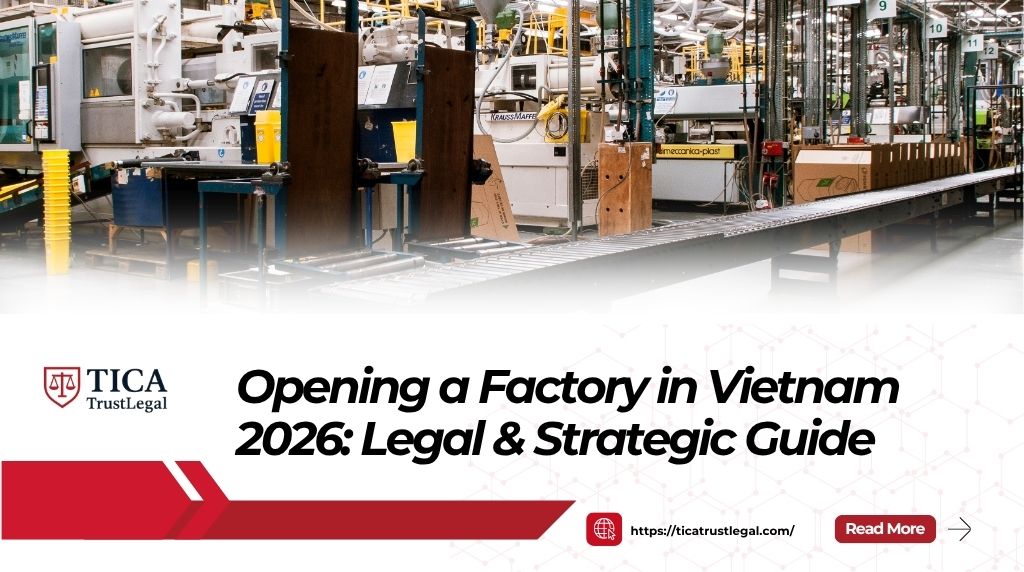
As of early 2026, the industrial landscape for opening a factory in Vietnam has shifted toward a high-efficiency, multi-modal entry system. For foreign investors, the decision is no longer just about “where” but “how”—specifically choosing between the rapid deployment of Ready-Built Factories (RBF) or the long-term scalability of leasing land for custom construction. Navigating the Law on Investment 2020 and stringent post-rental compliance is mandatory to successfully integrate into Vietnam’s booming electronics, semiconductor, and textile supply chains.
1. Entry models: Choosing the right speed to market
When opening a factory in Vietnam, investors must choose an infrastructure model based on their capital commitment and timeline:
- Ready-Built Factories (RBF): This is the preferred route for SMEs and high-tech firms needing rapid entry. Setup typically takes only 6 to 9 months. RBFs provide professional management services and pre-installed basic infrastructure, significantly reducing initial operational burdens.
- Land Lease and Construction: Targeted at large-scale manufacturers requiring specialized layouts. While it offers total customization and 50-year stability, the process—from securing land plots to completing construction can take 18 months or longer.
2. Pre-rental strategy and due diligence
The success of opening a factory in Vietnam depends heavily on the “Pre-rental” phase. Investors should not sign a Memorandum of Understanding (MOU) without conducting comprehensive due diligence:
- Location Analysis: Evaluate proximity to Category 1 ports (Cat Lai, Hai Phong) and airports. Infrastructure reliability—specifically electricity stability for high-tech production—is a non-negotiable factor.
- Legal Scrutiny: Engage legal counsel to verify the developer’s Land-Use Rights (LUR) and existing environmental permits. Ensure the industrial zone is zoned for your specific industry code (CPC/VSIC) to avoid permit rejections later.
- Workforce Landscape: Partner with local agencies to assess labor availability and the presence of vocational training centers in the province to ensure a sustainable talent pipeline.
3. The licensing journey: IRC, ERC and Sub-licenses
Under Decree 31/2021/ND-CP, the administrative sequence for opening a factory in Vietnam follows a strict “Dual-License” system, followed by critical operational permits:
- IRC & ERC: Obtain the Investment Registration Certificate (15–30 days) followed by the Enterprise Registration Certificate. This legalizes your entity but does not authorize production yet.
- Firefighting Design Approval: Before any “fitting-out” of machinery, you must submit technical drawings to the provincial police. Approval usually takes 5 to 10 business days.
- Machinery Importation: Be aware that Vietnam strictly prohibits the import of used machinery over 10 years old. Certain specialized equipment will require quality inspections before customs clearance.
Read more: Investment Registration Certificate Vietnam: Step-by-Step Legal Guide
4. Post-rental compliance: Safety and environment
The final phase of opening a factory in Vietnam involves high-stakes environmental and safety checks. Non-compliance at this stage can lead to immediate operational shutdowns:
- Firefighting Acceptance: After installation but before operation, the provincial police must conduct a physical inspection to issue the Firefighting Acceptance Certificate.
- Environmental Licensing: Depending on your production scale and hazardous waste potential, you must obtain an Environmental License or an Environmental Impact Assessment Report (EIAR). This is increasingly scrutinized under Vietnam’s 2026 “Green Growth” commitments.
5. Maximizing financial and FTA incentives
A major benefit of opening a factory in Vietnam is the aggressive fiscal support system. Under current laws, manufacturers can leverage:
- Corporate Income Tax (CIT) Holidays: Projects in prioritized sectors (e.g., high-tech, supporting industries) often enjoy a 4-year tax exemption and 9-year 50% reduction.
- Free Trade Agreements (FTAs): With 15+ active FTAs (EVFTA, CPTPP, RCEP), a Vietnam-based factory acts as a duty-free gateway to over 60% of the world’s population, provided the “Rule of Origin” (RoO) is met.
Opening a factory in Vietnam is a rewarding but intricate journey. Whether you opt for a Ready-Built Factory for speed or custom land leasing for scale, the key to longevity lies in balancing rapid setup with strict adherence to fire safety and environmental laws.
For professional legal support in navigating MOU negotiations, IRC/ERC procurement, and post-rental compliance, contact Tica Trustlegal. Our experts provide end-to-end solutions to ensure your manufacturing venture thrives in Vietnam’s dynamic industrial ecosystem
Read more: Setting Up a Foreign Company in Vietnam: 2026 Legal Guide

ARE YOU HAVING TROUBLE WITH BUSINESS LEGAL PROCEDURES?
- WORKING OFFICE: 110/20/14 No. 30, Ward 6, Go Vap District, Ho Chi Minh City, Vietnam
- Hotline / Zalo / WhatsApp: +84 354 658 272
- Email: tica.trustlegal@gmail.com


